



The technical gap might have seem to be closed this year. The hiring gap definitely didn’t. And AI just moved the goalposts again.
Angular is a complete framework. React is a UI library. Both power serious enterprise applications in 2026 — at Netflix, at Google, at Fortune 500 companies you’ve never heard of because their apps never go public. The technical gap has narrowed to near-zero.
What hasn’t narrowed: the difference in hiring speed, onboarding time, organizational fit, and — a special addition from this year:
How each framework behaves when AI is writing a meaningful share of your code.
That’s what this debate is actually about.
Here’s what this article answers:
👉 Why The Angular Vs React Debate Never Ends
👉 What Angular Is in 2026 (Not What You Remember)
👉 What React Is in 2026 (Also Not What You Remember)
👉 Angular vs React: The Honest Breakdown
👉 The AI Variable In Angular Vs React
👉 When Angular Is the Right Call
👉 When React Is the Right Call
👉 What Does Your Hiring Market Look Like For React Vs. Angular?
👉 Angular Developer vs React Developer: What You’re Actually Hiring For
👉 Which Framework Fits Your Team? [Interactive Tool]
Why The Angular Vs React Debate Never Ends?
React developers and Angular developers have been arguing online since 2016.
The memes are good. The threads are long. Here’s one from Reddit that we dig:
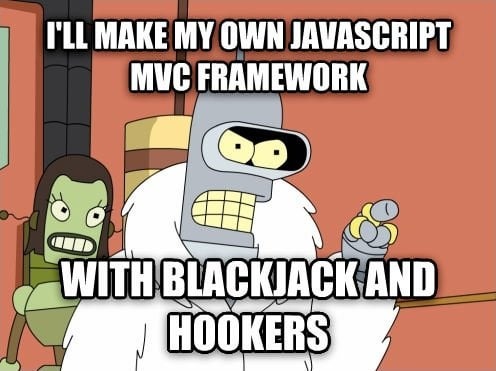
Source: Reddit
The thing is, React is based on JavaScript, and so is Angular.
Yet, they are as close as the North Pole is to the South Pole.
When we asked one of our own React developers what they thought of Angular, the answer was immediate:
“Angular sucks, y’all! Betcha you can’t learn Angular as easily as React!”
But that isn’t helpful if you’re a hiring manager who got handed a job brief that said “Senior Angular Developer” and went on to type this exact query into Google.
And that’s probably why you’re here.
The Angular vs. React debate persists not because developers can’t make up their minds.
It’s because someone on a board made a framework choice and now three teams have to mobilize to staff it, budget it, or sign off on a JD for it.
One Reddit commenter summarized this better than most white papers:
“Angular is what happens when you want 15 developers to produce consistent code at 9am on a Monday without a standup. React is what happens when you want 3 developers to ship something remarkable by Friday.”
Both are correct. They just describe different organizations. The question is which one describes yours.
Our end goal is through this article: help you understand what you’re in for and create exciting job descriptions.
And if you’re a candidate, we want to help you understand and decide where you should apply.
What Angular Is In 2026 (it’s not what you remember)
If your mental model of Angular is from before version 17, update it. Angular has changed more in the last two years than in the five before that — and most of the complaints that made it the butt of developer jokes have been addressed.
What Angular is: A complete, opinionated framework maintained by Google. It ships with routing, HTTP handling, form validation, dependency injection, and a testing framework built in. You don’t choose your stack. Angular is the stack.
The features that define it — in plain terms:
- Two-way data binding — the view and the model stay in sync automatically. Change one, the other updates. Less code to write, easier to debug, harder to reason about at scale
- Dependency injection — components get what they need handed to them automatically instead of building it themselves. Makes testing dramatically easier
- HTML templates — the UI is defined in template files, separate from logic. Designers can touch templates without touching TypeScript
- Modular structure — code is organized into clear, self-contained units with defined boundaries. This is why 15 developers can work on the same codebase without colliding
- Built-in routing, forms, and testing — all shipped with the framework, all maintained by Google, all upgraded together
What’s new in 2026:
- Signals and zoneless rendering — Angular 20 stabilized the Signals API; Angular 21 shipped Signal Forms and completed the zoneless migration. Change detection no longer relies on zone.js, which means smaller bundles and less rendering overhead than any previous version
- Standalone components are now default — NgModules are no longer required, making Angular’s component model much closer to React’s
- New control flow syntax — @if, @for, @switch replace the old directive syntax. Cleaner and faster
- Learning curve has decreased — not gone, but meaningfully lower than it was in 2021
The companies that stayed on Angular — Google Cloud Console, Gmail, Microsoft Office web apps, Siemens — aren’t companies that couldn’t migrate. They’re companies that looked at what Angular was giving them and decided the trade was worth it.
What React Is In 2026 (also not what you remember)
React is a JavaScript library for building user interfaces. That sentence has been true since 2013. What surrounds it has changed completely.
What React is: A UI rendering library maintained by Meta. It handles components and state. Everything else — routing, data fetching, forms, testing, HTTP — you choose. That freedom is React’s greatest strength and, if you’re running a 20-person engineering team without strong architectural discipline, its most expensive risk.
The features that define it — in plain terms:
- Virtual DOM — React keeps a lightweight copy of the page in memory, works out the minimum change needed, then updates only that. Fast, and the reason React handles frequent UI updates well
- One-way data binding — data flows in a single direction. More predictable, easier to trace when something breaks, slightly more code to write
- JSX — HTML-like syntax written directly inside JavaScript. Developers either love it or find it deeply wrong. There is no middle ground
- Component-based architecture — the UI is built from small, reusable pieces. Change one component without breaking the others
- React Native — the same team and much of the same code can build your iOS and Android apps. This is a real strategic advantage if mobile is on your roadmap
What’s new in 2026:
- React Server Components (RSC) — components run on the server by default; client-side JavaScript only ships where explicitly needed, cutting bundle sizes by 50%+ on content-heavy applications
- The React Compiler is stable — automatic memoization at build time, eliminating manual useMemo and useCallback in most cases
- Next.js is effectively React’s enterprise framework — most serious React applications at scale are Next.js applications. The “React is just a library” framing is partially obsolete for anyone building production software
The companies using it at scale: Facebook, Instagram, Netflix, Airbnb, Notion, Linear. Predominantly product companies with strong engineering cultures — and dedicated frontend architects making the decisions Angular makes for you automatically.
Angular vs React: The Honest Breakdown
| Dimension | Angular | React |
| Core nature | Full framework | UI library |
| Language | TypeScript (enforced) | JS or TypeScript (your choice) |
| Data binding | Two-way | One-way |
| Built-in features | Routing, forms, HTTP, DI, testing | UI rendering only |
| Learning curve | 3–6 months to productivity | 1–3 months to productivity |
| Bundle size (minimal app) | ~80KB with router | ~42KB, grows with ecosystem |
| Architecture decisions | Framework makes them | You make them |
| Hiring pool (US, Q1 2026) | ~18,000 active listings | ~45,000 active listings |
The AI Variable
Every Angular vs React comparison written before 2025 is missing the most important variable.
AI-assisted development has quietly rewritten both sides of this argument — and almost nobody is pricing it in.
Here’s what’s actually happening.
👉 React has significantly more AI tooling behind it.
The training data is a bit lopsided. React has been the dominant framework in public code repositories for a decade, which means AI models generate React more fluently than Angular. And the tooling has followed: Vercel’s v0 generates production-quality React components from a text prompt — and offers nothing to teams using Angular, Vue, or Svelte. That’s not a small gap. It’s an entire category of tooling that exists on one side of this decision and not the other.
👉 But AI generates Angular badly in ways that matter.
A 12-month enterprise evaluation of AI coding assistants on Angular work found a recurring failure pattern: AI tools produce React-style JSX syntax inside Angular templates that doesn’t compile at all, misconfigure dependency injection scopes, and fail to set up TestBed correctly for component tests. Angular’s DI system, RxJS patterns, and template syntax are structurally different from everything else the models were trained on — and generic AI assistants fall over on them.
👉 Also, Google noticed.
Angular shipped an MCP server in August 2025 connecting its documentation directly to AI coding assistants, and Angular 21 was released with AI-first tooling. The gap is closing — from behind. React’s head start in training data isn’t something a docs server fixes.
And then it flips.
Angular enforces TypeScript. React doesn’t. There is no JavaScript Angular — but there is a great deal of JavaScript React, and plenty more React with TypeScript applied loosely
That gap is now a safety mechanism. When AI generates code that’s subtly wrong — a mistyped property, a null that shouldn’t be there, a contract violation between two components — Angular’s compiler catches it before it ships.
In a loosely-typed React codebase, that same error reaches production and surfaces as a bug three weeks later.
Angular also ships a CLI that scaffolds components, services, guards, and pipes to a consistent pattern. React has no equivalent — scaffolding depends on your meta-framework or custom scripts. When AI is generating a large volume of code quickly, having a canonical structure it must conform to is worth more than it was when humans wrote every file by hand.
What this means for how you hire
| Angular | React | |
|---|---|---|
| AI generation speed | Slower, more correction needed | Faster, more fluent output |
| AI-specific tooling | Limited | Extensive (v0, Copilot React modes) |
| Guardrails on AI mistakes | Strong — strict TS + compiler + CLI patterns | Weak by default; depends on team discipline |
| Risk profile | AI slows you down | AI speeds you up, then compounds architectural drift |
The hiring consequence is the part nobody says out loud: if AI writes most of the boilerplate code, you are actually just hiring for the judgment to review AI output and catch what it got wrong.
That devalues the junior developer who knows framework syntax. It sharply increases the value of the mid-to-senior developer who can look at 200 lines of generated code and say “this will break under load, and here’s why.”
For React teams, that judgment is the only thing standing between fast AI-assisted development and an unmaintainable codebase in eighteen months. For Angular teams, the framework absorbs some of that risk — which means you can run a slightly more junior team without the same architectural exposure.
Neither of those is an argument for one framework. Both are arguments for being honest about the team you actually have.
Hiring AI Engineers Or Frontend Devs? Compare the costs first.
Select your hiring region, choose your team size and compare the true cost of building an in-house engineering team against hiring remotely through BEEU TECH. Includes recruitment costs, employment overheads and projected annual savings.
When Angular Is the Right Call
Angular makes the most sense when governance and consistency matter more than flexibility and speed.
- Building internal systems — ERPs, CRMs, HR platforms, banking dashboards — that will be maintained by rotating teams over 5–10 years
- Team has 10+ frontend developers who need to produce consistent, auditable code without architectural debates eating sprint time
- Engineering foundation is .NET or Java — Angular’s class-based, TypeScript-first, dependency injection patterns mirror backend patterns these teams already know
- Operating in regulated industries — healthcare, banking, government — where predictable upgrade paths and built-in testability reduce compliance risk
- You want the framework to make architectural decisions for you. In large teams, that’s a feature
State of JS 2025 puts Angular’s satisfaction score at 48% against React’s 72% — a gap that would normally signal a framework in decline. It hasn’t declined. Google Cloud Console, Gmail, and Microsoft’s Office web apps still run on it. Developers don’t love Angular. Organizations keep picking it anyway. Both are true.(Source: Tech-Insider, 2026)
When React Is the Right Call
React makes the most sense when speed, flexibility, and hiring velocity matter more than enforced consistency.
- Building a public-facing SaaS product or digital platform that needs to iterate fast and has SEO requirements (Next.js handles both)
- Team is small and senior enough to establish its own architectural conventions without the framework doing it for them
- Sharing code with a React Native mobile application — the cross-platform story is real and saves meaningful effort
- Need to hire quickly — React’s hiring pool runs roughly two to three times larger than Angular’s across US and India markets. Stack Overflow’s 2025 survey puts React usage at 44.7% of developers against Angular’s 18.2%.
- Engineering culture values functional programming and the ability to assemble a best-in-class library stack
The honest caveat nobody says: React’s flexibility is a liability without architectural discipline. Netflix and Airbnb succeed with React at enterprise scale because they have dedicated frontend platform teams making the decisions Angular makes automatically.
What Does The Hiring Market Look Like For React Vs. Angular?
Every Angular vs React article compares features. Almost none of them tell you what happens to your recruiting timeline after you make the choice.
That’s the gap. And it’s where frameworks become business problems.
The hiring reality in 2026:
| Angular | React | |
| US active job listings (Q1 2026) | ~18,000 | ~45,000 |
| Developer usage globally | 18.2% | 44.7% |
| Avg onboarding to productivity | 3–6 months* | 1–3 months* |
| US senior developer salary (median) | ~$131,755 – $151,806 | ~$121,163 – $140,410 |
| 12-month total cost of ownership | Near-identical | Near-identical (within 5%) |
| Where talent pools | Enterprise consultancies, regulated industries | Product companies, bootcamps, startups |
* In our experience placing both, Angular developers take meaningfully longer to reach full productivity in a new codebase — the framework has more surface area. React’s ramp is faster, but the variance in what “productive” means is much wider.
Also: worth sitting with: Angular developers cost roughly 8% more than React developers at both mid and senior levels. That runs against the intuition that the harder-to-find framework should be the cheaper one. It’s the scarcity premium. React’s larger pool means more candidates competing for the same role.
What this means in practice:
Choose Angular and need to hire 8 developers in 90 days — you’re competing for a smaller, more specialized talent pool that knows it. Doable. Takes longer. Tends to surface more senior candidates with genuine enterprise backgrounds.
Choose React and need to hire 8 developers in 90 days — larger pool, faster sourcing, but you’ll need to filter harder for architectural maturity. A lot of React developers have built components. Fewer have owned a production frontend at scale.
India + US context specifically: India’s React talent pool is significantly larger and faster to source. For US companies building hybrid teams — which is most of BEEU TECH’s briefs — React positions fill faster. Angular briefs take longer but typically surface candidates with stronger TypeScript discipline and more experience in structured enterprise environments.
Angular Developer vs React Developer: What You’re Actually Hiring For
“We need a React developer” means different things depending on what you’re building. Same with Angular. The framework is the label. The actual role is underneath it.
| When you say this… | You probably actually need… |
| “React developer for our SaaS product” | Frontend engineer with Next.js, TypeScript, state management experience (Zustand/Redux Toolkit), and architectural instincts |
| “React developer for our dashboard” | Could be mid-level or senior depending on data complexity — know which before you write the JD |
| “Angular developer for our enterprise app” | Someone fluent in TypeScript, RxJS, observables, and Angular’s module and DI architecture — not someone who did an Angular tutorial in 2022 |
| “Angular developer to maintain our legacy system” | Specifically needs Angular 12–14 experience if the codebase is that old. Angular 21 knowledge doesn’t automatically transfer backwards |
| “Frontend developer, Angular or React” | You haven’t decided. Make the decision first — posting for both produces confused briefs and weaker candidates |
Interview questions that reveal real seniority regardless of framework:
- Walk me through a production performance problem you diagnosed and fixed
- How do you manage state in a large application? What are the tradeoffs of your preferred approach?
- When would you recommend migrating away from the current framework?
That last one is the tell. Anyone who can’t answer it clearly has never had to live with a wrong technical decision at production scale — and has probably never had to help hire their own replacement.
The Bottom Line
Angular is not dying. React is not winning everything.
In 2026, both frameworks have closed the gaps that used to make this an easy call. Performance is essentially equal in production conditions. TypeScript is default in both. Total cost of ownership over 12 months is within 5% of each other.
The actual differentiator is organizational:
- Large team, regulated industry, long-lived internal system, .NET or Java backend? Choose Angular
- Smaller team, public-facing product, fast hiring needed, Node.js backend? Choose React + Next.js
- Heavy AI-assisted development with a mid-level team? Angular’s guardrails are worth more than React’s tooling advantage
- Heavy AI-assisted development with senior architects on staff? Choose React, and you’ll move faster than anyone
- Mixed situation? Start with your talent market and your team’s current reality, then work backwards to the framework
The framework debate will continue. It’ll be on Reddit next week. The hiring problem doesn’t wait.
Find the Right Developer (No Matter The Framework They Write In)
BEEU TECH sources pre-vetted Angular and React developers across US, India, and UAE markets. We match your project requirements, team structure, and hiring timeline to the right specialist — not just the right framework keyword.
72-hour onboarding. 14-day risk-free trial available. No last-minute cancellations.
Quick Answers to the Questions Everyone Asks About Angular Vs. React
Is Angular or React faster?
In 2026, neither — meaningfully. Angular’s signals-based change detection matches or beats React’s virtual DOM for targeted updates. React edges ahead on large batch inserts and ships less JavaScript on content-heavy pages via Server Components. In production, your database queries, API latency, and third-party scripts will dominate load times long before the framework does.
Is Angular or React easier to learn?
React. A developer who knows JavaScript can ship React components within days. Angular takes 3–6 months to real productivity because there’s more framework to learn — TypeScript, decorators, dependency injection, RxJS. The gap has narrowed since Angular 17, but it hasn’t closed.
Which framework has more jobs?
React, by roughly 2.3 to 1 in US active listings as of Q1 2026 (~45,000 vs ~18,000). But raw job count is a developer’s metric, not an employer’s. What matters to you is availability at your budget and timeline — and there, the gap is smaller than the headline number suggests.
Is Angular better than React?
No. And React isn’t better than Angular. This question has been asked for a decade and the honest answer hasn’t changed: they solve different organizational problems. Angular is better for large teams that need enforced consistency. React is better for smaller teams that need speed and flexibility. Anyone giving you a universal answer is selling something.
Is Angular bad for SEO?
It used to be. That’s outdated. Angular Universal has offered server-side rendering for years, and Angular’s SSR story in 2026 is solid. React with Next.js still has the edge for content-heavy public pages, but “Angular isn’t SEO friendly” is a 2019 claim that people are still repeating in 2026.
Can React and Angular be used together?
Technically yes — both are JavaScript, and micro-frontend architectures do let you run them side by side in the same application. Practically, you probably shouldn’t. You’d be maintaining two ecosystems, two build pipelines, two dependency trees, and hiring for two skill sets. The scenarios where this makes sense are narrow: a gradual migration from one to the other, or genuinely independent modules owned by separate teams. If you’re considering it for any other reason, the answer is usually no.
Is Angular dying?
No. Angular 21 introduced signals-based reactivity and made standalone components the default — the most significant modernization the framework has had. Google Cloud Console, Gmail, and Microsoft Office web apps all still run on it, and Angular remains dominant in European enterprise markets and regulated industries. Lower mindshare on Twitter is not the same as declining adoption in enterprise.
Originally published February 2023. Fully updated for 2026.